Best After Hours Answering Services For Medical Offices
Most after-hours answering services for medical offices are sold on coverage: someone picks up. Coverage is the easy part. The harder question is what the system is allowed to say back before it knows who is calling. That's the after-hours disclosure ladder, and most setups skip rungs.
Imagine it's 8:15 on a Saturday morning. A mother stands in her kitchen, phone in one hand, feverish toddler on her hip. The fever never broke overnight. She doesn't know if this is a wait-until-Monday problem or a get-in-the-car-now problem, so she calls the pediatrician's office.
Nobody picks up. She hangs up before the voicemail greeting even finishes, because she's already answered her own question: a silent line means try somewhere else. Ninety seconds later she's searching "urgent care near me," and a patient the practice has treated for six years just became someone else's problem.
That single call is the entire argument for after-hours answering services for medical offices, compressed into ninety seconds. This guide is written for the administrator or practice owner still deciding whether after-hours coverage is worth building, what it actually fixes, and what separates a system that works from one that just documents that a phone rang.
Pesta
For a multi-location practice group or an enterprise-scale healthcare organization, the calculation looks different than it does for a solo office. You need a configuration that stays consistent across every site, pricing that scales with your portfolio instead of a per-minute meter that punishes a busy flu season, and enough visibility into what happened on every call that leadership can actually audit it rather than take a vendor's word for it.
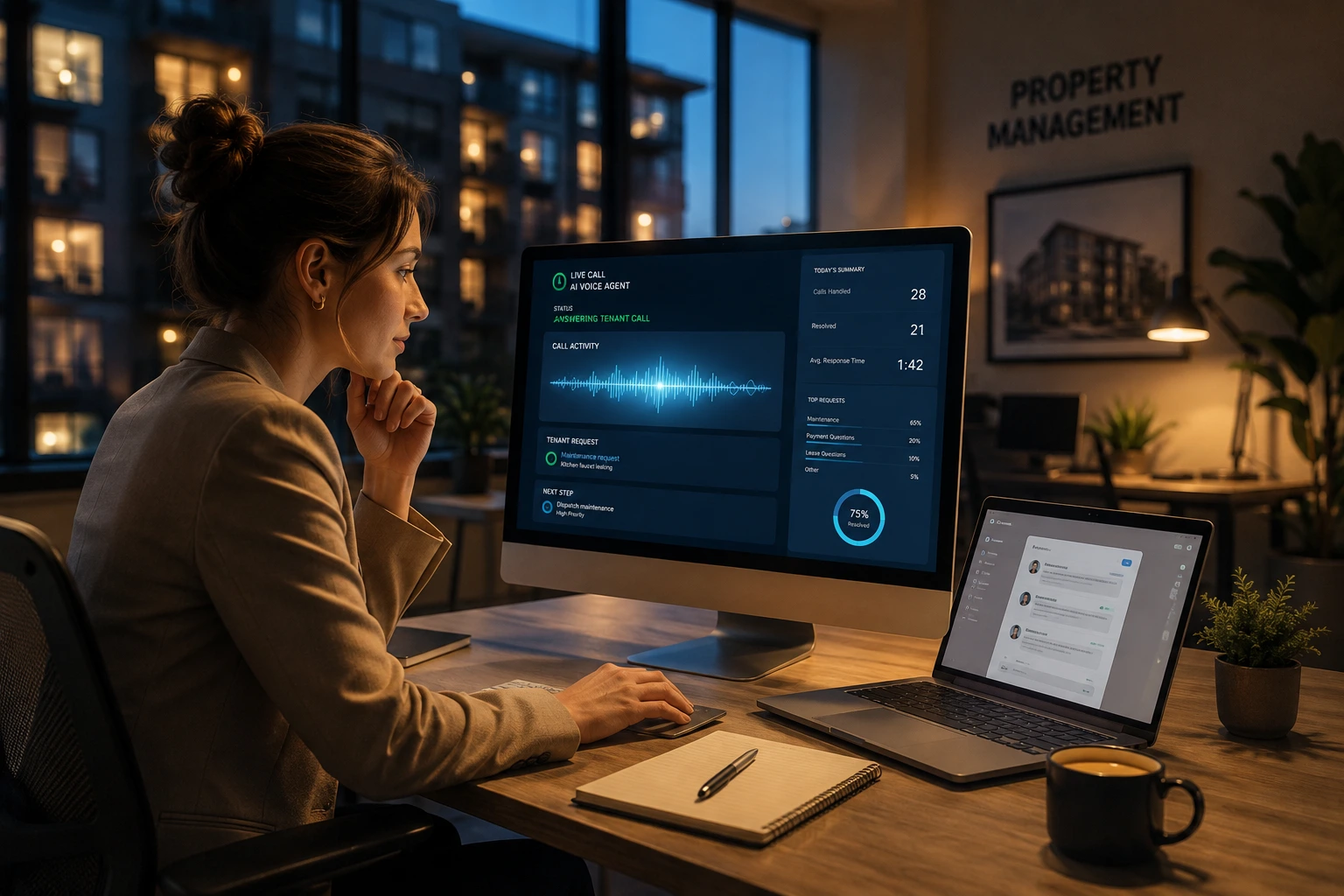
This is the gap an AI voice agent like Pesta is built to close. Rather than a rigid script or a workflow a practice has to build from a blank canvas, it works from a configured knowledge base, so it can engage with what a caller actually describes and classify it correctly without demanding a name and date of birth before it will listen. That matters most in the after-hours moment described at the top of this article: a worried parent describing a symptom should be met with triage, not a form to fill out verbally. It also produces full transcripts and call analysis for every interaction, which turns the morning handoff from a stack of notes into a record a practice manager can actually review, and turns "how many overnight calls did we actually resolve" from a guess into a number.
And because it complements the front desk rather than replacing clinical staff, the on-call provider still makes every clinical call. The AI voice agent for healthcare applies the same protocol at 3 a.m. that it applies at 3 p.m., consistently, which is the one thing no rotating human team, however well trained, can promise. Powered by Deepdub.
Retell AI
Retell AI is a developer-first platform. A practice, or more realistically its technical partner, builds a custom answering agent from scratch: the greeting, the branching logic, the booking behavior, then points an existing phone number at it over standard telephony infrastructure. The appeal is cost and flexibility, since usage-based pricing means a quiet month costs less than a busy one, and the agent can be shaped to do almost anything the practice can specify. The catch is that nothing arrives pre-built for healthcare. Someone still has to design the triage rules, write the escalation logic, and test it against real call types before it ever touches a patient, which is a real lift for a practice without in-house technical capacity or a development partner on retainer.
Freed Front Desk
Freed's Front Desk is built specifically for clinical workflows rather than adapted from a general-purpose call center product, and it shows in the defaults: appointment scheduling, on-call routing, and secure messaging come configured out of the box. The tradeoff shows up in pricing structure. Flat, block-based pricing is predictable but fits awkwardly against a practice whose call volume swings seasonally, and a platform built as an extension of a broader clinical documentation suite is not always the simplest fit for a multi-location group that needs one consistent configuration across several sites.
Greetmate
Greetmate takes a different angle entirely: most practices have never actually written down their triage rules, their escalation path, or what a clean morning handoff looks like, and Greetmate designs that protocol with you, tests it, and refines it during the first weeks of live traffic. That white-glove design work is genuinely valuable for a practice that has never formalized any of it. It also comes at enterprise-infrastructure pricing with a multi-month minimum engagement, which puts it out of reach for a practice that wants to test a smaller deployment before committing.
Nexa Healthcare
Nexa's hybrid approach routes routine calls through AI triage first and escalates anything ambiguous to a live agent, which is a reasonable middle ground on paper. In practice, the live-escalation portion still bills per minute, so the cost advantage of automation gets diluted the moment call complexity rises, which is exactly when a practice most wants a predictable bill rather than a variable one.
After Hours Answering Services Comparison
What Is an After-Hours Answering Service for Medical Offices?
An after-hours answering service for medical offices is any arrangement that answers patient calls once the front desk has gone home, typically 5 P.M. to 8 A.M. plus weekends and holidays. At minimum it captures why the patient called. A functioning one goes further: it decides whether the call needs a clinician tonight, gets urgent calls to the right person on a defined path, and hands everything else to staff the next morning in a form they can act on without reconstructing the conversation from scratch.
That last part is where most setups quietly fall short. Answering the phone is table stakes. What separates a real system from an expensive recording device is what happens after the greeting: triage, escalation, and a clean handoff.
How Does a Medical Answering Service Work?
Strip away the marketing and every medical phone answering service is doing the same four things, whether a human or software is doing them.
- It answers. No hold, no voicemail box, no busy signal.
- It classifies the reason for the call. Prescription refill, appointment change, billing question, or something a clinician needs to hear about tonight.
- It decides what happens next. Routine items get logged or scheduled. Anything flagged urgent gets routed to an on-call provider through a path someone defined in advance, not improvised in the moment.
- It hands off what it collected. Ideally as structured information staff can act on immediately, not a stack of sticky notes to decode at 8 a.m.
How medical answering services handle after-hours calls in practice depends entirely on who or what is doing steps two and three, and that is where the real differences between options show up.
Why Medical Offices Need After-Hours Answering
Every practice that has not designed an answering flow is still running one. It is just informal, and informal systems fail in predictable ways.
Medical office missed calls have a cost you can put a number on
A caller who reaches a dead end, whether that is an unanswered line or a voicemail box nobody checks until Monday, tends not to call back. They call the next practice. For a new-patient inquiry, that is a lost patient before you ever knew they existed. For an existing patient with a real concern, that is a delayed diagnosis or an unnecessary ER visit that could have been resolved with a five-minute phone conversation.
Missed patient calls after hours also create a documentation gap
Nobody logs the calls that never got answered. Leadership cannot see what they never captured, which means the practice is making staffing and coverage decisions blind, without knowing how many calls come in overnight, what they are about, or how many of them were genuinely urgent.
The on-call provider's personal cell phone is not a system either
It works, in the sense that a licensed clinician makes every call. But every call, including a refill question and a portal password reset, arrives on the same line as a genuine emergency, at the same 2 a.m. ringtone. There is no record of what was promised, no acuity sorting, and no protection against burning out whoever is holding the phone that week.
The Real Benefits of After-Hours Answering Service for Medical Offices
Set up correctly, the benefits of after-hours answering service for medical offices are less about the phone itself and more about what stops falling through the cracks:
- Fewer patients lost to a dead end. A caller who reaches a real response, live or automated, is a caller who stays your patient instead of becoming someone else's.
- Genuine emergencies reach a clinician faster, because the classification step happens before anyone has to wait in a queue, and the escalation path is written down instead of improvised.
- Staff stop starting the day reconstructing the night. A structured, acuity-sorted handoff means the morning is spent working the schedule, not decoding what happened between 6 p.m. and 8 a.m.
- Leadership gets visibility it never had. Call volume, topic mix, and escalation frequency turn after-hours from an invisible cost center into something that can actually be measured and improved.
How to Manage Patient Calls After Hours: A Short Checklist
If you are trying to figure out how to respond to patient calls after hours in a way that actually holds up, a few questions are worth answering honestly before you sign anything:
- Do you have triage rules in writing? Not "urgent versus non-urgent," but a real list of your most common after-hours call types, each mapped to a specific outcome.
- Is there a named escalation path with a timer and a fallback? Someone specific gets contacted, in a specific order, and there is a defined next step if they do not respond.
- What does the patient hear out loud? "Someone will call you back before 10 a.m." is a promise the practice can be held to. "We'll get back to you" is not.
- What actually lands on the schedule by morning, not just in a message queue?
- Can you pull a month of overnight call topics on demand? If the answer is no, that gap is itself the finding.
FAQ
[Q]What is an after-hours answering service for medical offices?[/Q]
[A]
A coverage arrangement, live or automated, that answers patient calls once the office is closed, determines whether the situation needs a clinician that night, and delivers everything else to staff the next business day in a form they can act on.
[/A]
[Q]How does a medical answering service work?[/Q]
[A]
It answers the call, classifies the reason behind it, escalates anything urgent along a predefined path to an on-call provider, and hands off routine items, ideally as structured records rather than a pile of messages to decode.
[/A]
[Q]Is a HIPAA compliant medical answering service actually required if I only get a handful of after-hours calls?[/Q]
[A]
Yes. Volume does not change the rule. Any service handling protected health information, even occasionally, is a business associate under HIPAA and needs a signed BAA regardless of how few calls come through overnight.
[/A]
[Q]What's the difference between a live-operator service and an AI voice agent?[/Q]
[A]
A live-operator service staffs humans who follow a written script and typically take a message for staff to act on the next day. An AI voice agent handles the conversation directly, classifies and routes it in real time, and produces a transcript of exactly what was said and decided, which a script and a message slip cannot do on their own.
[/A]
[Q]Can an AI voice agent handle something like a prescription refill request after hours?[/Q]
[A]
Yes, for the classification and logging part. It can capture the request, confirm the medication and pharmacy details, and route it to the right queue for a provider to approve the next business day. It should not make the clinical call on whether to approve the refill itself.
[/A]